What does it mean to translate something online? The obvious answer is to take words spoken or written in one language and make them available in another. But a recent tourism campaign from GoTürkiye shows why digital translation can be much more complicated.
Whisper of Origins is an eleven-episode YouTube mini-series that follows two characters traveling through southeastern Türkiye. Instead of looking like a traditional tourism advertisement, it looks more like a short television drama. The characters speak Turkish, while international viewers can turn on subtitles in eleven languages, including English, Arabic, Chinese, Spanish, French, and German. But the subtitles are only one of the ways the series communicates with viewers who may know little about the language or places being shown.
Laura Gonzales’s Sites of Translation offers a useful way to think about what is happening. Gonzales describes translation as a multimodal practice. In other words, communicating across languages and cultures involves more than finding equivalent words. People can draw on language, images, sound, cultural knowledge, gestures, and other ways of communicating to help others understand. The important question becomes how these different resources work together for a particular audience and situation.
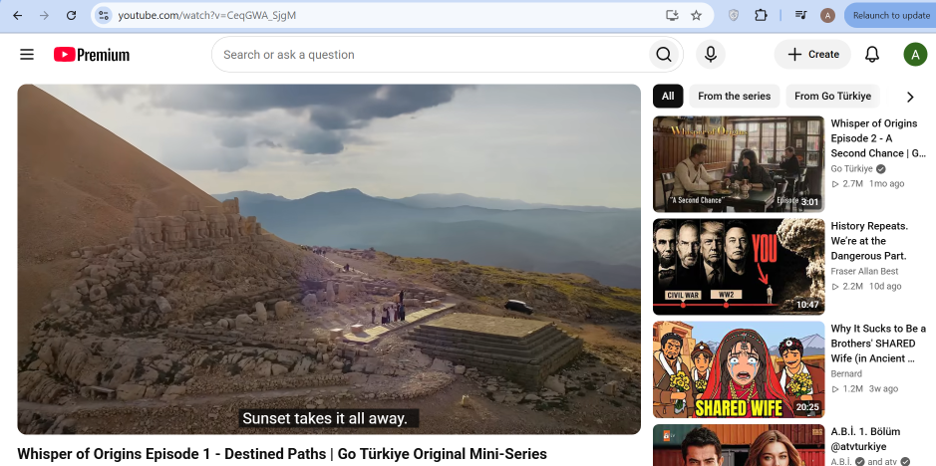
We can see this in the opening part of Whisper of Origins. Wide shots introduce the landscape and historical setting while we hear Turkish dialogue, read English subtitles, listen to music, and watch the actors move through the environment. As an English-speaking viewer, I need the subtitles to understand exactly what the characters are saying. But the subtitles do not create the experience by themselves. The landscape establishes a sense of place. Music creates atmosphere. The actors’ voices, facial expressions, and gestures communicate emotion. The sound of Turkish also remains part of the experience even when I cannot understand the words. Together, these different modes do something the subtitles could not do alone. The subtitles help me understand the dialogue, but the images, music, voices, gestures, and landscape help construct the experience of Türkiye that the series is trying to communicate to an international viewer.
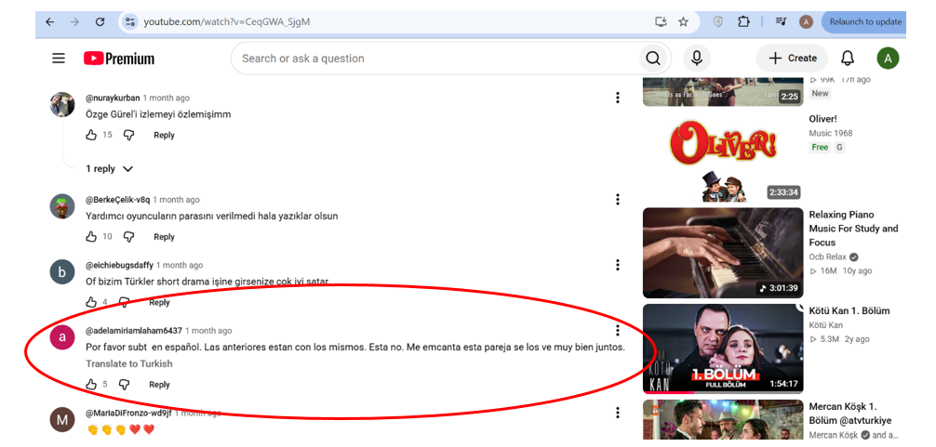
The comments suggest that viewers are responding to this combination. One viewer calls the series a “virtual trip,” while another says that watching it made them want to visit the places shown. A Spanish-speaking viewer praises the use of short stories to show Türkiye’s natural and cultural beauty. The series is therefore doing more than giving viewers information about tourist destinations. It is using story, language, sound, and images to help people imagine experiencing those places themselves.
But the comments also reveal an interesting problem. GoTürkiye pinned a comment explaining that subtitles are available in eleven languages and telling viewers to turn them on through YouTube’s settings. Even so, several Spanish-speaking viewers ask for Spanish subtitles or a Spanish translation.
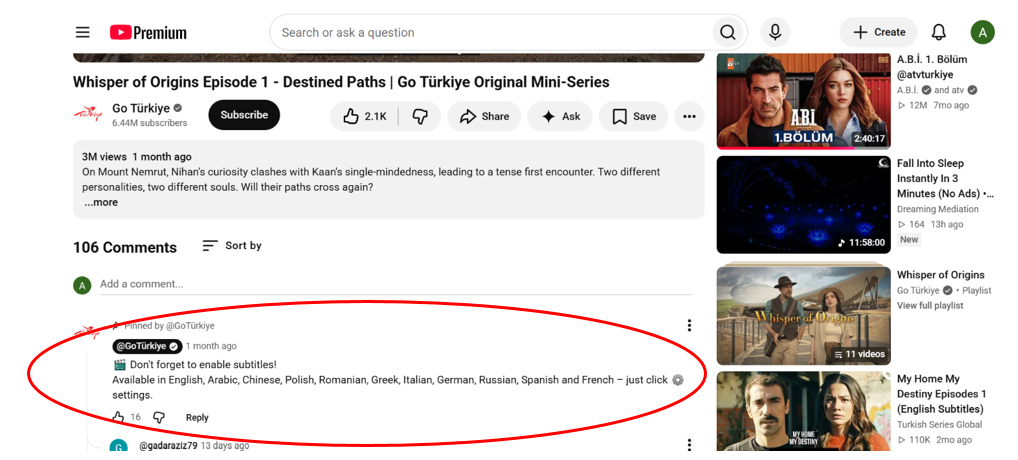
The list of available languages raises another question that the video itself cannot answer. Why these eleven languages? English complicates the question because it can function as a lingua franca for viewers whose first languages are not represented in the subtitle list. The available languages therefore do not necessarily tell us exactly which national or linguistic audiences GoTürkiye hopes to reach. They do, however, show that choices have been made about how different audiences will access the series. Without information about how GoTürkiye made those choices, I cannot know whether they reflect tourism markets, expected viewers, translation resources, or something else. The rhetorical evidence brings that question into view, but it cannot answer it.
This small misunderstanding points to an important difference: making a translation available is not necessarily the same as making it accessible. The Spanish translation exists, but viewers still need to know it is there, find the correct YouTube setting, and turn it on. The platform itself becomes part of whether translation succeeds.
Whisper of Origins shows why Gonzales’s broader understanding of translation matters in digital spaces. Translation does not end when someone changes Turkish words into Spanish or English ones. Meaning is also being created through images, sound, performance, cultural knowledge, and the design of the platform carrying the message. For digital writers and creators, maybe the better question is not simply “Did we translate this?” but “Can our audience actually access the meaning we are trying to share?”
 Alan K. Murray
Leave a comment